
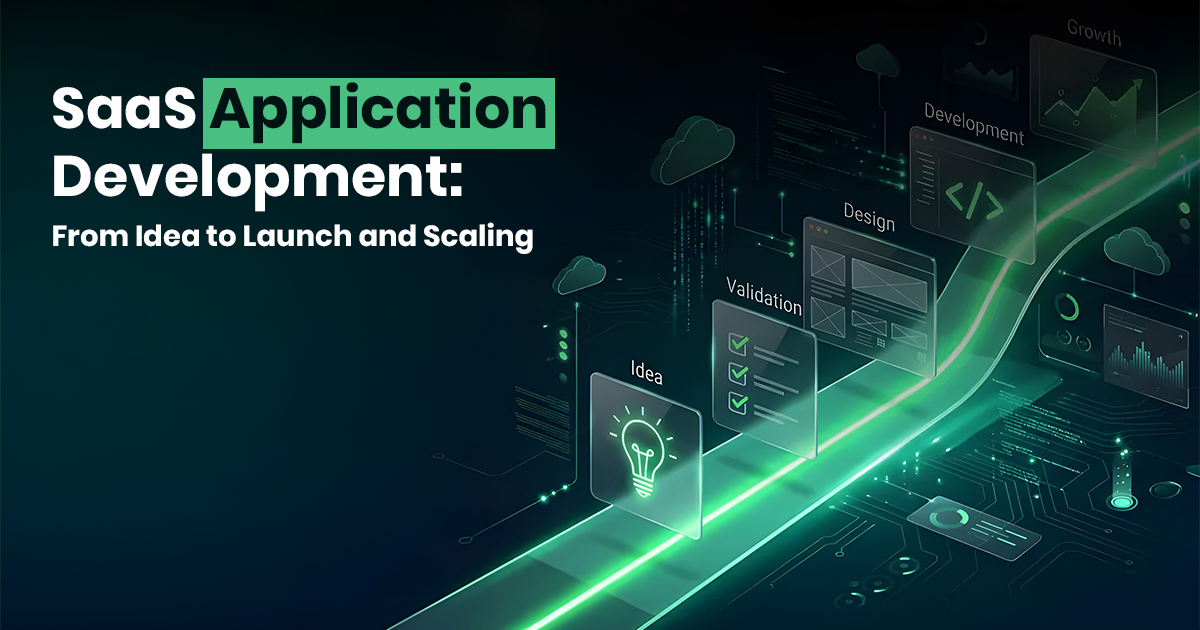
Most SaaS Ideas Don’t Fail Because of Technology
The growth of SaaS is booming in healthcare, logistics, e-commerce, finance, and even real estate, making this space look promising. However, SaaS products usually fail not because of technology issues but because founders make many critical mistakes before even releasing their product. They may overlook the importance of validation, under-estimate the level of difficulty, and over-estimate the interest in their product. While the idea itself might not be important for success, the thinking behind that idea certainly is.
Phase 1: Real SaaS Starts With Real Problems
The primary mistake in developing a SaaS app is creating an app without first validating its demand. A good SaaS product should solve a highly irritating, repetitive, and expensive business problem, not a feature idea. Validation involves reaching out to actual users such as logistics managers, health workers, salespeople, real estate agents, and e-commerce owners.
Focus on:
- Broken workflows
- Wasteful processes
- Lost revenue opportunities
- Inefficiencies that can be paid for
When there is urgency and underserved demand, it makes sense to build. Without validation, great products will still fall flat.
Phase 2: Designing a System That Can Actually Scale
The architecture design determines the scalability of your software. The two major options include:
- Multi-tenant architecture, where several clients use one application, with their data being separated. Cost-effective and highly scalable, good for general usage.
- Single-tenant architecture, in which every tenant has their own configuration, is the architecture type. Often used in health care, finance, and government organizations due to regulatory reasons.
The first mistake that occurs is premature overengineering. Early-stage startups may opt for microservices before even knowing their clients, and the best architecture for such applications is modular monolith architecture. SaaS applications nowadays have become increasingly AI-driven, incorporating automation, predictive analytics, and intelligent workflows right from the start
Phase 3: Your MVP Should Prove One Thing Only
The MVP is not necessarily a smaller product; rather, it is a test meant to determine whether users would actually utilize and purchase your product. Some key considerations in building an MVP include:
- A single workflow
- Little friction
- Easy onboarding
- Gathering real-user behavior
Most MVPs for SaaS products can be developed in 6-10 weeks using frameworks such as Laravel or Node.js.
Phase 4: Pricing Should Reflect Value
Growth will depend on how you price yourself without duplication in your competitor’s prices. Price according to your value proposition:
- Time saving
- Automation of the process
- Revenues generation
- Efficiency gains
Value-based pricing is especially suitable in the case of AI SaaS due to automation. Common methods are:
- Subscription packages
- Usage pricing
- Team-based pricing
- Enterprise offerings
Sustainable growth is linked to customer success, not just acquisition.
Phase 5: Growth Brings a New Set of Challenges
As the SaaS offerings begin to scale, it becomes important to focus on the infrastructure. The system needs to address issues such as:
- Cloud scaling
- Performance of APIs
- Database management
- Security
- Compliance
Enterprise-level customers demand immediate compliance, and standards such as SOC 2, HIPAA, and GDPR are already regarded as basic necessities within many procurement processes. Many SaaS offerings fail due to a lack of planning for scalability.
SaaS Looks Different Across Industries
Each industry utilizes SaaS technology differently; however, the aim always stays the same to solve operational issues effectively.
- In healthcare, compliance and security take priority.
- Logistics centers around automation and tracking.
- In e-commerce, personalization and customer retention become important.
SaaS technologies that know the workflow well will never complicate things but rather make it easier.
Related Solutions in SaaS and AI Development
Modern SaaS doesn’t exist in isolation it connects with real business systems across industries. Businesses today are actively investing in:
- AI-Powered CRM Development
- Smart Booking Portal Development
- AI E-Commerce SaaS Platforms
- Why Transportation Businesses Are Moving to Digital Dispatch Systems →
These solutions represent a major shift: SaaS is no longer just standalone software it is becoming part of larger intelligent ecosystems that power entire operations.
The SaaS Companies Winning in 2026 Are Building Adaptive Systems
The successful scaling SaaS companies do not only offer software solutions. Rather, they create intelligent systems that can learn, automate, optimize, and evolve with time.
Companies that focus on building an AI-first SaaS infrastructure benefit from:
- Increased operational efficiency
- Improved customer retention
- Enhanced automation ability
- Scalability
- Data-driven decision-making
- Among other improvements.
Digital Minds Pakistan can help in making SaaS platforms according to:
- Scalable architecture
- AI processes
- Smart automation
- Working efficiency
- Product development
Our services are available for businesses running in the USA, UK, UAE, Saudi Arabia, Canada, and Pakistan. As SaaS platforms’ development in 2026 will not be based on releasing products quickly, but rather on growing with its users’ needs.
The Future of SaaS Is Smarter
These fast-growing SaaS startups aren’t developing new features, but rather developing intelligent ecosystems.
AI today is capable of allowing SaaS solutions to:
- Streamline processes
- Enhance decision-making
- Offer customization
- Optimize processes
- Cut costs
The future belongs to learning systems.
Why SaaS Is No Longer Just About Building Software?
Application development for SaaS is more than a technical approach; it’s a business approach for the long term. To succeed in this, you need validation, proper architecture, MVP, price strategy, and scalability mindset from Day One. You are building software, but you are actually building a business.
Frequently Asked Questions (FAQs)
- What is SaaS application development?
It is developing applications that are stored and used on the cloud using subscription models. - How long does it take to develop a SaaS product?
It can take between 6 weeks to 10 weeks to develop an MVP and several months for more advanced versions of the platforms. - Why do most SaaS companies fail?
This is because most fail due to failure to validate demand, poor architectural decisions, and bad pricing models - What is multi-tenant SaaS architecture?
This is an approach that enables several users to access one system but keeps their information separate, thus ensuring easier scalability. - Does AI play a role in SaaS development?
AI is currently a requirement for modern SaaS products due to its application in automation, analysis, and efficiency.